

Skip links

What is workplace banking, and why East African employers are paying attention

It usually starts with a quiet message to HR on the 18th of the month. Someone’s child has been sent home over unpaid school fees. Someone else has a hospital bill. Can payroll release part of the salary early?
Most HR and finance teams in Africa know this message well. They also know what happens next: a spreadsheet, an approval chain, a manual deduction at month end, and the same request again next month. Meanwhile, the employee who couldn’t wait has often already borrowed from an app or a shylock at a rate they would never agree to on a calm day.
Workplace banking is a different answer to that message. Here is what it is, and why more employers are paying attention.
The problem is bigger than salary advances
Money stress is now one of the most common things employees bring to work. Old Mutual’s 2025 study of employed Kenyans found that about four in ten are highly stressed about their finances, and seven in ten have nothing left for emergencies once the month’s expenses are paid.
The wider picture is similar. Kenya’s 2024 FinAccess survey found fewer than one in five adults are financially healthy, and the share of people saving fell for the first time since 2009.
None of this stays at home. It shows up as distraction, absence, staff asking colleagues for loans, and good people leaving for a slightly bigger salary that doesn’t actually fix the problem.
So what is workplace banking?
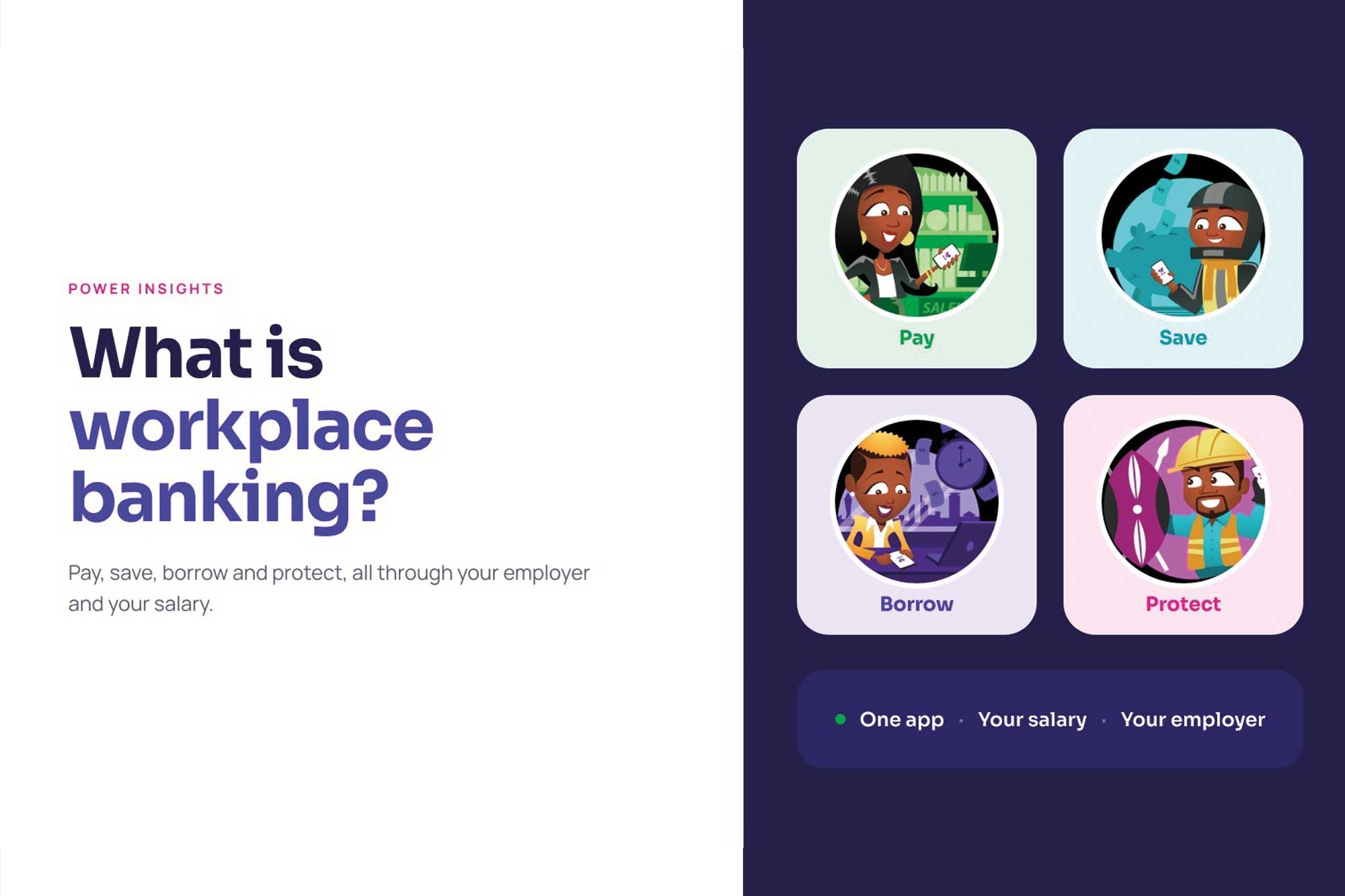
Workplace banking means giving employees access to financial services through their employer, connected to payroll. Instead of each person facing the market alone, the employer becomes the trusted channel.
A complete offer usually covers five things:
  • Pay: receiving and moving money easily.
  • Save: setting money aside automatically, before it gets spent.
  • Borrow: responsible access to credit for emergencies, including earned wages – what the employee has already earned.
  • Protect: access to insurance that cushions the shocks that cause most emergency borrowing.
Because it runs alongside payroll, it can be safer and cheaper for employees than borrowing elsewhere, and far less work for HR than running advances by hand.
How it differs from what you have today
Many organisations already have a staff welfare scheme, a SACCO or an informal advance policy. Workplace banking doesn’t have to replace these. Many providers work with SACCOs and banks rather than against them.
What changes is that access becomes instant, private and consistent. An employee doesn’t need to explain a family emergency to their line manager to get help. HR doesn’t need to approve every request. Finance gets one clean deduction file instead of a pile of exceptions.
Why employers are paying attention

1. It takes a manual job off HR and finance. Salary advances, deductions and the follow-ups that come with them take real time. An integrated platform turns that into a set-and-forget process.

2. It improves focus and attendance. An employee who isn’t worried about this month’s rent is more present at work.

3. It strengthens retention and the employer brand. In a tight talent market, a benefit that helps people every single month is noticed. It also tells staff that the company cares about their lives outside work.

What to look for in a provider
If you’re considering workplace banking, ask these questions:
  • Is it regulated? Check the licences:digital credit, insurance and data protection.
  • Is credit responsible? Limits should be tied to what employees have earned, with clear and fair costs.
  • Does it integrate with your payroll or HR system? Manual uploads defeat the point.
  • Does it work for every employee? Not everyone has a smartphone; USSD access matters.
  • Does it go beyond borrowing? Saving, insurance and education are what actually reduce emergency borrowing over time.
  • Is employee data private? Staff should be able to get help without their employer seeing the details.
Where Power fits

Power is a workplace banking platform built for Africa. Employers set up once through a web portal and payroll integration. Employees then get access through the Power app or USSD to pay, save, borrow and protect . Power works with banks, SACCOs, insurers and HR platforms across Kenya, Uganda, Zambia and Rwanda.

If the 18th-of-the-month message sounds familiar, it might be time for Power.

Power is licensed by the Central Bank of Kenya as a Digital Credit Provider.